
Borrego Springs is worth visiting in summer only for heat-tolerant travelers seeking solitude, off-peak rates, and unique desert experiences, as summer temperatures regularly exceed 110°F (43°C) with extreme heat dangers that require strict safety precautions. This remote desert town in San Diego County, California, transforms from a popular winter destination into one of the hottest places in North America during summer months (June through September 2025).
Understanding Borrego Springs Summer Climate
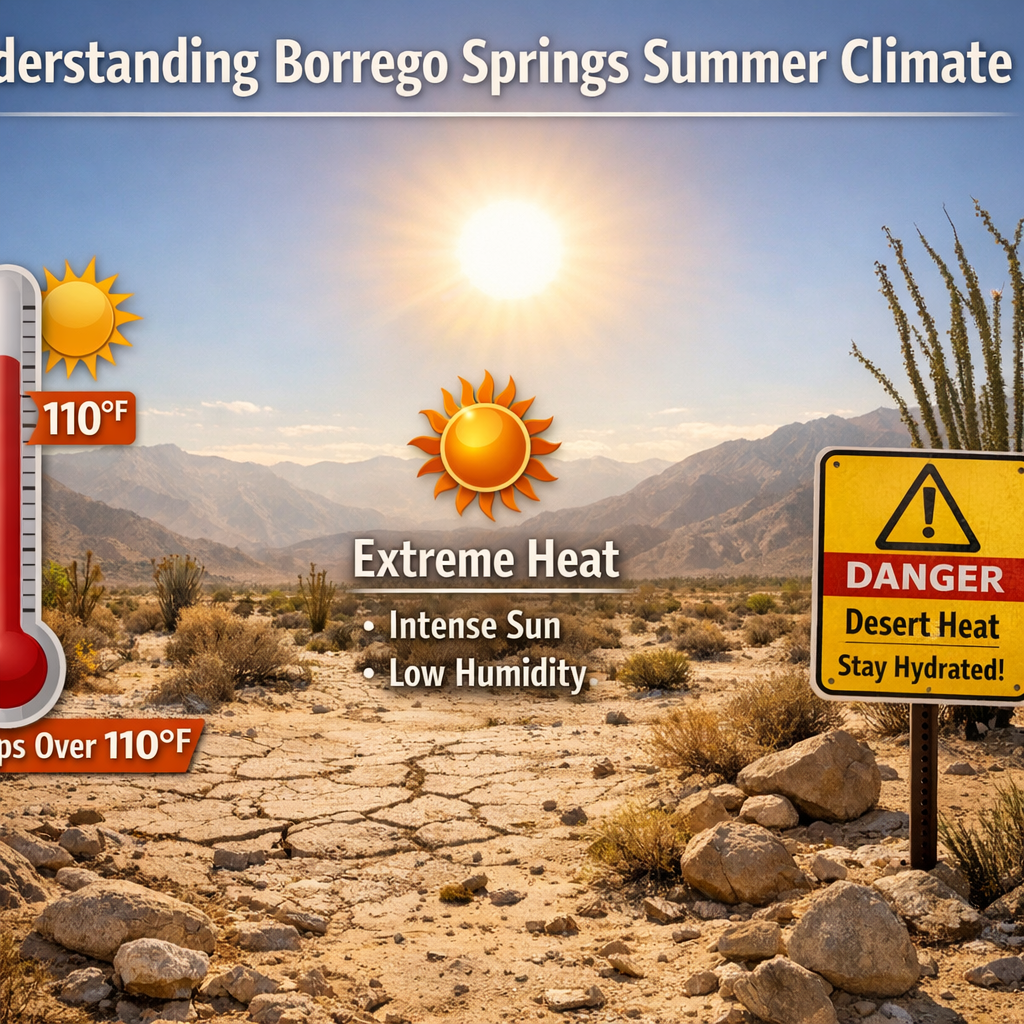
Borrego Springs sits within the Colorado Desert, a subdivision of the larger Sonoran Desert, at approximately 600 feet (183 meters) elevation. According to the National Weather Service, summer temperatures in Borrego Springs average 108-115°F (42-46°C) during July and August, with extreme temperature travel conditions persisting from mid-May through late September. The desert climate zone produces dry heat with humidity typically below 15%, creating arid conditions that accelerate dehydration and increase thermal stress on the human body.
The hottest month in Borrego Springs is July, when afternoon temperatures consistently reach triple digit temperatures. UV exposure reaches extreme levels (UV Index 11+) between 10 AM and 4 PM, making sun protection essential for any outdoor exposure. Flash floods can occur during the monsoon season (July-September) when afternoon thunderstorms develop, creating dangerous conditions in Earthquake Valley, Coyote Canyon, and other low-lying areas within Anza-Borrego Desert State Park.
Key Characteristics of Summer Desert Travel to Borrego Springs

Summer visitation to Borrego Springs differs dramatically from peak winter tourism season. Key characteristics include:
- Extreme Heat Conditions: Daily temperature range from 85°F (29°C) at sunrise to 115°F (46°C) by 3 PM, with heat index values that pose serious heat-related illness risks
- Off-Season Benefits: Summer discounts of 30-50% on accommodations at Borrego Springs Resort, La Casa del Zorro, and other properties, plus uncrowded access to Galleta Meadows sculptures by Ricardo Breceda and Font’s Point overlook
- Limited Outdoor Recreation: Desert hiking restricted to pre-dawn hours (before 7 AM), with Borrego Palm Canyon trail and other desert landscape features accessible only during early morning activities
- Enhanced Stargazing: As an International Dark Sky Community certified by the International Dark Sky Association in 2009, Borrego Springs offers exceptional astronomy opportunities after sunset when temperatures drop to 85-90°F
- Indoor-Focused Tourism: Air-conditioned attractions, resort pools, and indoor activities become primary draws rather than outdoor recreation
Critical Heat Safety and Desert Survival Considerations
Heat exhaustion and dehydration present real dangers during Borrego Springs summer travel. The Bureau of Land Management and Anza-Borrego Foundation recommend these essential heat precautions:
Hydration Tips for Desert Conditions
Drink 1 gallon (4 liters) of water per person per day minimum. Thermal conditions in the Colorado Desert cause water loss through perspiration at rates exceeding 2 liters per hour during midday. Electrolyte replacement becomes necessary for stays longer than 2 hours in direct sun exposure. Visitors should carry twice the water they think they need.
Sun Protection Requirements
Apply SPF 50+ sunscreen every 90 minutes. Wear wide-brimmed hats, UV-blocking sunglasses, and lightweight long-sleeved clothing in light colors. Sunburn prevention is critical, as sunburn combined with heat stress significantly increases heat-related illness risk. The Visitor Center at Anza-Borrego Desert State Park provides detailed desert heat safety information.
Timing Outdoor Activities
Schedule all outdoor recreation between 5:30-8:30 AM. Temperatures during this window range from 75-95°F (24-35°C), making sunrise activities the only safe option for desert photography, wildlife viewing, and short hikes. Avoid all outdoor exposure between 10 AM and 6 PM when peak summer heat creates excessive heat warning conditions.
What You Can Actually Do in Borrego Springs During Summer
Despite extreme temperature extremes, summer visitors can enjoy specific activities:
| Activity Type | Best Timing | Safety Level |
|---|---|---|
| Desert wildlife photography at Galleta Meadows | 5:30-7:30 AM | Safe with proper hydration |
| Resort pool use at Borrego Springs Resort | All day | Safe (supervised water activities) |
| Indoor art viewing and Christmas Circle exploration | All day | Safe (air-conditioned accommodations) |
| Stargazing and astronomy programs | After 8 PM | Safe (cooler evening temperatures) |
| Font’s Point sunrise drive | 5:00-7:00 AM | Moderate (remote location requires preparation) |
Desert camping becomes impractical without specialized equipment. RV parks with air conditioning hookups at Ocotillo Wells provide the only viable camping option. Summer outdoor activities must be restricted to early morning or post-sunset hours.
Common Misconceptions About Desert Summer Conditions
Myth: “Dry heat is more tolerable than humid heat, so summer desert travel is manageable.”
Reality: While low humidity prevents the oppressive feeling of humid heat, temperatures above 110°F cause heat exhaustion regardless of humidity levels. The human body cannot maintain safe core temperature through sweating alone when ambient temperature exceeds 105°F for extended periods.
Myth: “You can explore Anza-Borrego Desert State Park during summer if you bring enough water.”
Reality: Water alone cannot prevent thermal stress when heat index values reach extreme levels. Desert hiking during summer months poses life-threatening risks even for experienced desert adventure enthusiasts. The National Park Service documents multiple heat-related deaths annually in desert parks during summer.
Myth: “Summer monsoon season brings cooling relief to Borrego Springs.”
Reality: Summer storms occur sporadically and briefly, increasing flash flood risk without significantly reducing ambient temperature. Afternoon thunderstorms may drop temperatures by 10-15°F temporarily, but extreme heat returns within hours.
Borrego Springs Summer vs. Spring Comparison
Spring (March-April) represents the optimal time to visit Borrego Springs California, contrasting sharply with summer conditions:
Spring Wildflowers Season: Desert blooms transform Borrego Badlands and Coyote Canyon into colorful landscapes with temperatures of 75-85°F (24-29°C), perfect for all-day outdoor recreation and desert landscape photography.
Summer Desert Environment: No flowering vegetation, brown dormant desert ecology, and hot desert environment that limits tourist attractions to early morning or evening hours. Shoulder season advantages of spring provide comfortable weather patterns without summer heat advisory risks.
Winter tourism (November-February) offers temperatures of 65-75°F (18-24°C), attracting peak visitation to this small town tourism destination. Unlike summer’s low season emptiness, winter brings crowded conditions at popular sites and higher accommodation costs.
Practical Decision Framework: Should You Visit in Summer?
Who Should Consider Summer Visits
Summer visits to Borrego Springs suit travelers seeking: (1) significant summer hotel deals and off-peak rates for budget travel, (2) complete solitude at normally crowded desert park visitation sites, (3) unique experience of extreme hot weather camping for desert survival training, or (4) professional desert photography under harsh lighting conditions. Heat-tolerant individuals with desert heat tolerance built through acclimatization may appreciate the remote desert town when emptied of typical tourists.
Who Should Avoid Summer Visits
Families with children, seniors, individuals with cardiovascular conditions, and anyone seeking active outdoor recreation should postpone visits until October-May. The worst time to visit Borrego Springs for general tourism runs from mid-June through mid-September when hot weather tourism becomes impractical for most visitors.
Summer Vacation Desert Planning Considerations
If visiting during summer despite warnings: (1) book air-conditioned accommodations with pool amenities, (2) plan indoor things to do Borrego Springs summer as primary activities, (3) limit stays to 2-3 days maximum, (4) schedule arrival after sunset, (5) maintain constant communication about location due to remote desert town isolation, and (6) monitor National Weather Service excessive heat warnings.
Consider alternative desert destination options like higher-elevation areas near Joshua Tree’s hidden gems, Julian (at 4,200 feet elevation), or postpone desert travel to the comfortable shoulder season of October-November when temperature extremes moderate.
Final Verdict on Summer Desert Tourism Value
Borrego Springs during summer represents an extreme environment requiring careful evaluation of heat dangers versus off-season benefits. While summer discounts and solitude appeal to specific travelers, most visitors will find greater value and safety visiting during spring wildflowers season, comfortable winter months, or fall shoulder season. Nature tourism thrives in Borrego Springs, but summer’s climate considerations outweigh advantages for typical desert tourism expectations.